
North Carolina Wanted Lists
There is no official master most-wanted list for North Carolina. The North Carolina State Bureau of Investigation, local sheriffs, and police departments fill the gap. They issue selected wanted notices or press releases instead. Agency pages change often, and some vanish, so go to each office's current source. These lists also serve different purposes. They highlight selected cases only. Warrants and wanted people can be left off entirely. Note the agency name, the notice date, and the official page. Do that before treating one record as distinct from another.
Official Statewide Notice Inventory
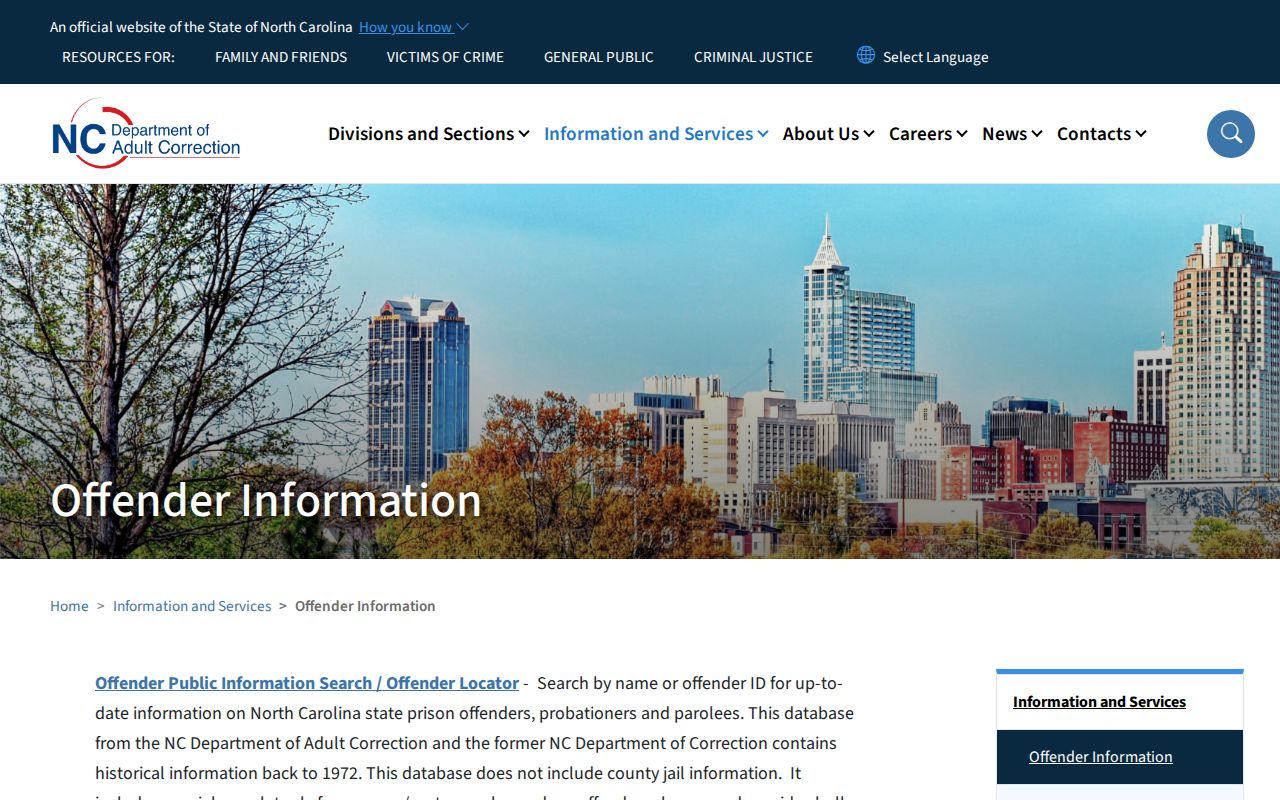
Start any statewide search with the North Carolina Department of Adult Correction (NCDAC) page named in the notice. Local notices, federal fugitive leads, and custody alerts all live on separate sources. NCDAC links to offender and supervision tools. None of them is a statewide warrant database.
| Official source | What it covers | Photo or alert role |
|---|---|---|
| NCDAC criminal-offender searches | Links to escapes and captures, absconders, releases, downloads, and law-enforcement search aids. | Routes visitors to separate agency tools; not a county warrant roll. |
| NCDAC absconder search | Searches an absconder by last name and county of supervision. | A supervision-status search. A photo may appear for an eligible absconder. |
| NCSBI and local sheriff or police notices | Agency-specific wanted notices and releases, with local scope and changing availability. | Use only images or identifying details on that issuing agency's official page. |
| U.S. Marshals Service fugitive apprehension | Federal fugitive-apprehension work and official federal notices. | A federal lead, not a North Carolina county booking record. |
| North Carolina SAVAN and VINELink | Free custody and supervision status notifications. | Phone, text, email, or TTY alerts; not a public mugshot feed. |
Treat every official link as a starting point. A notice or photo may simply be unavailable. A blank or moved page can mean outdated content, so return to the agency's current site rather than trusting copied posts or stale search snippets. NCDAC's directory lists offender tools and supervision searches, but state supervision records and local arrest warrants have different custodians. The NCDAC criminal-offender searches page works as an index. Pick the specific tool that fits your question. No single result covers every status.
The North Carolina SAVAN information page explains custody alerts. It is a separate service.
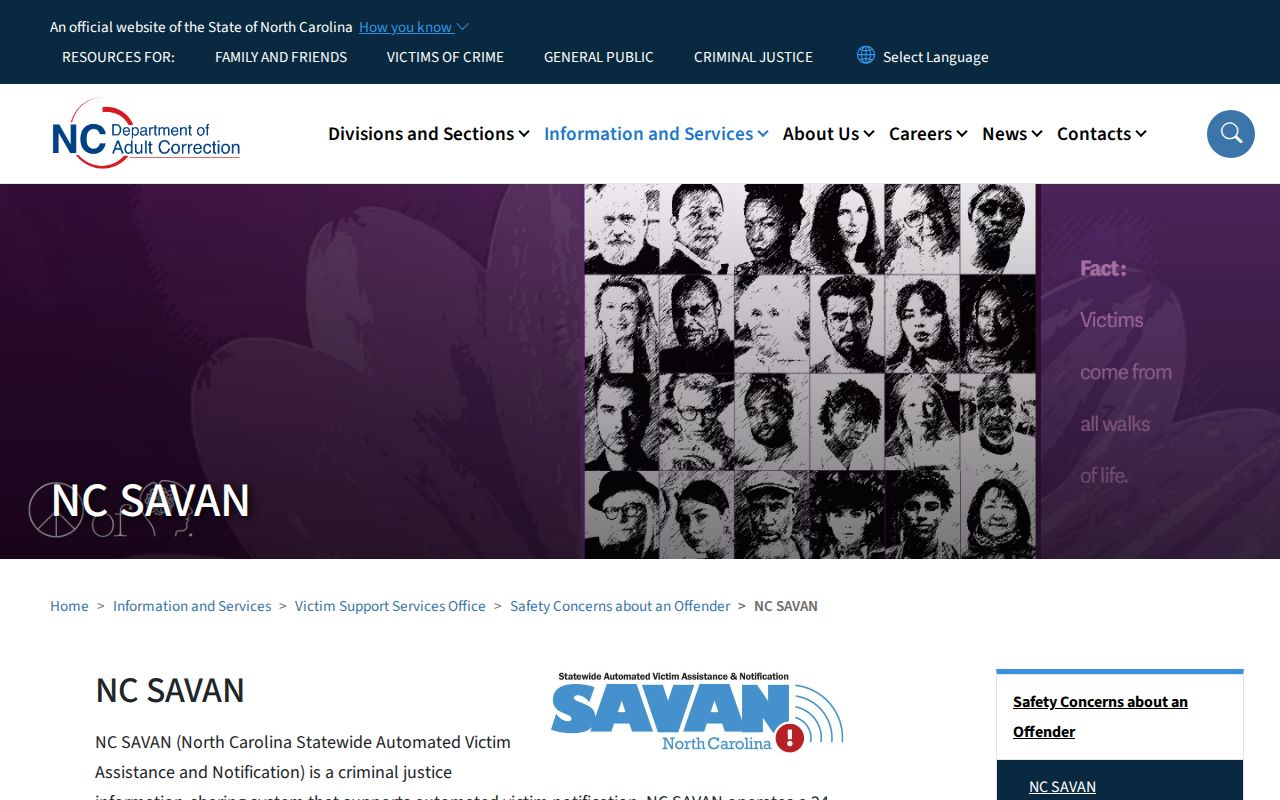
SAVAN alerts arrive by phone, email, text, or TTY. The service is not a fugitive or warrant search. It offers no booking photos either. NCDAC handles photos under its own rule. Its public disclaimer limits photo display to active inmates and people who abscond from supervision. An inactive record may stay searchable without a public photo. There is no universal schedule for replacing images, so tie any picture to its listed status rather than treating it as proof of a new county arrest or a current likeness.
North Carolina County Wanted Posts
Research confirms agency-specific wanted notices, but not statewide standards for page format, photos, posting schedules, or tip numbers; confirm current details with the issuing agency. Posts may change or disappear. An empty page does not prove that no warrant or investigation exists.
First, check the issuing agency and date. Match the named person with listed identifiers. Read the alleged matter, case number, and official tip method. These details are leads, not court findings. A photo may lack its date or current status.
| Notice field | What it tells you | Limit |
|---|---|---|
| Issuing agency | Who published the notice. | Does not make it a court ruling. |
| Date and identifiers | When it appeared and which person is named. | A name alone may match someone else. |
| Charge or case | The reason or court matter stated by the agency. | Does not prove guilt or current warrant status. |
| Image and contact route | How the agency presents the notice and receives information. | Use its official route; do not assume a photo is current. |
Begin with the county tied to the warrant or case. Use the sheriff's or police department's official site. The North Carolina County Directory also points to local records and issuing-agency wanted pages. A jail roster shows custody, not warrant status. Check the issuing agency, date, alleged conduct, and reporting route. Posts can change while old copies linger online. Confirm current status with the named agency rather than an old post.
Save a notice for reference with care. Record the issuing agency, official URL, notice date, and the date you viewed the page. Revisit that source before repeating details. A saved copy does not prove a listing remains active.
A notice is not the case outcome. In participating counties, eCourts may show public events and dispositions. The clerk remains the source for an official copy. Entries can be delayed or restricted. Check notices and dockets separately. If a public result shows filings or hearings without an outcome, say exactly that. Note the search date as well. Ask the clerk whether a public disposition or official docket copy exists. A missing outcome proves neither dismissal nor acquittal nor an open warrant.
North Carolina Absconders and Warrants
NCDAC defines an absconder as someone actively avoiding probation or parole supervision. Its search takes a last name and county of supervision. That status is not a county warrant. It is not a new conviction either. It also differs from a sheriff's wanted designation. Someone can be missing from one source simply because each tracks a different legal or supervision event. NCDAC's photo rules apply only to its records. A sheriff or court holds different ones. Identify the custodian for each notice type. Read the notice date and scope, and confirm names and status with the responsible agency before sharing a claim.
| Record or notice | What it describes | Where to confirm |
|---|---|---|
| NCDAC absconder | A person actively avoiding probation or parole supervision. | NCDAC search and the county of supervision shown there. |
| County warrant | A local court or law-enforcement matter; it is not an NCDAC supervision label. | The issuing county's clerk or responsible agency. Some unreturned warrants are restricted in public search. |
| Sheriff, police, or NCSBI notice | An agency-selected wanted notice or release, with that agency's scope. | The current official page of the agency that issued it. |
| U.S. Marshals fugitive notice | A federal law-enforcement lead. | The U.S. Marshals Service source and related federal court record. |
None of these sources completes the others. A person absent from one list may appear in a different jurisdiction's record, and a stale copy can linger after the official notice changes. The official NCDAC absconder search is a supervision tool, not a county warrant check.
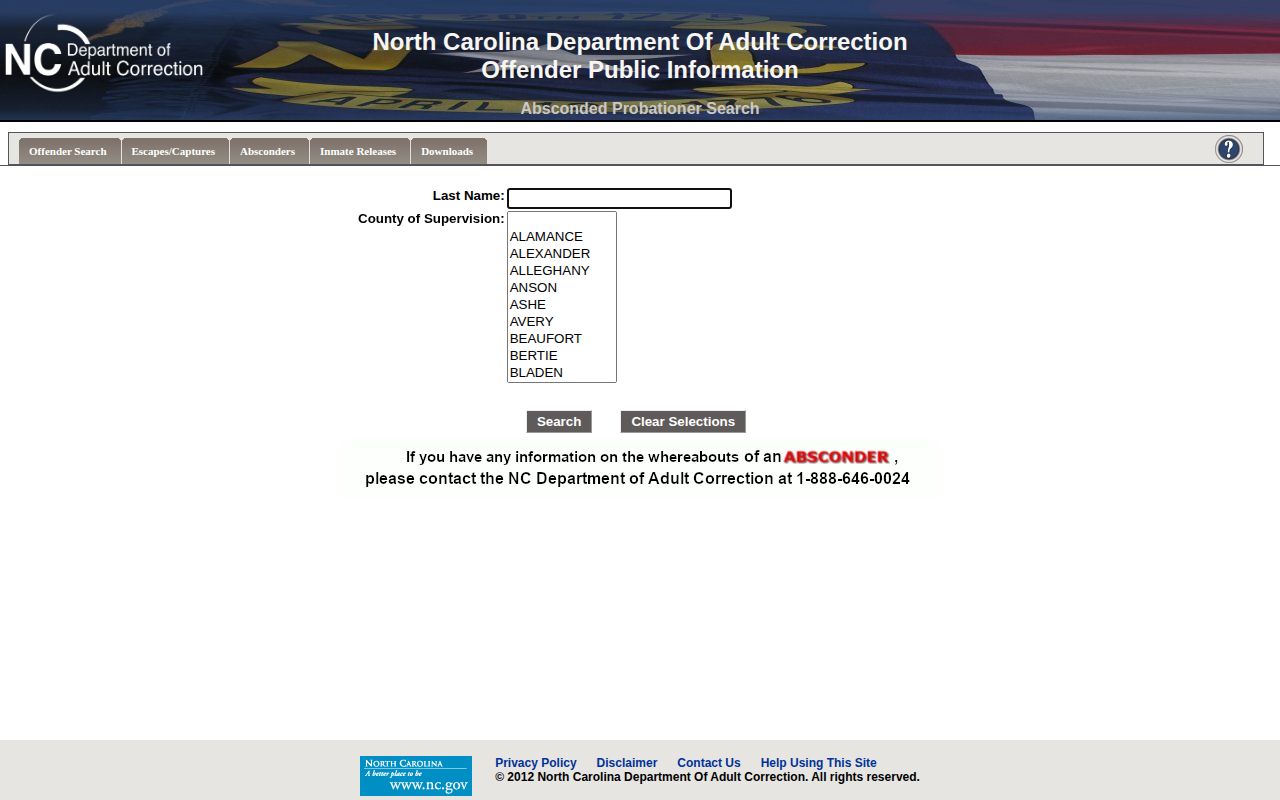
The county field works as a supervision filter. It does not prove an arrest or charge there. NCDAC posts escapes, captures, absconders, and releases as distinct resources, so a status label should stay attached to its own record.
Federal North Carolina Fugitive Records
Federal fugitive work belongs to the U.S. Marshals Service. The agency chases suspects across state lines. Its wanted notices work as leads for the public, not as findings from any court. Photos are another matter. Under the Marshals' photo policy, prisoner details, images, histories, and movement records stay private in most cases, with only narrow exceptions.
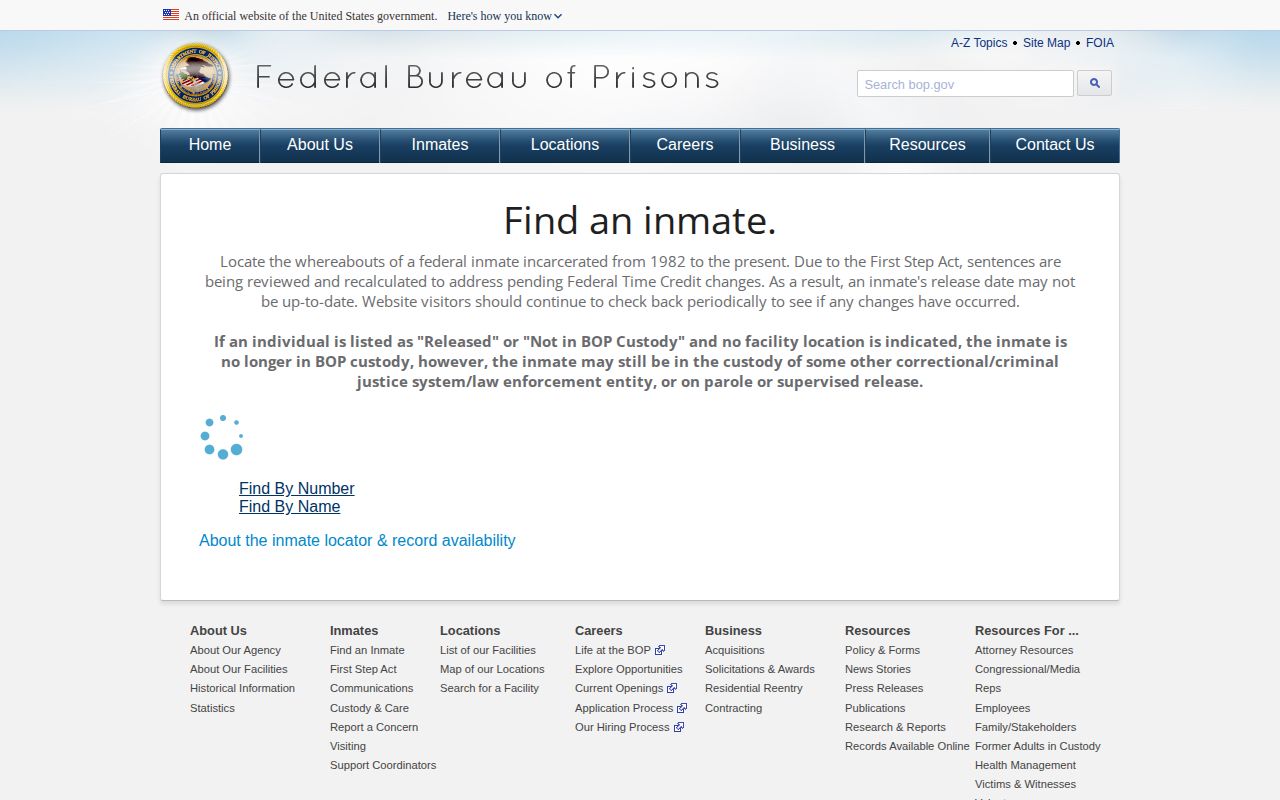
The federal Bureau of Prisons offers a different tool. Its locator, searchable by name or register number, reaches inmates back to 1982 and reports who is in custody. A search returns fields like name, register number, age, race, sex, release date, and location. Release dates can lag. It is not a public booking-photo roster or a wanted list, and a missing name may simply mean the person sits in a state, local, or other federal facility. Those results describe federal custody only, so they cannot confirm a county warrant, a fugitive designation, or a fresh local arrest. The BOP's official inmate locator shows how custody searches and fugitive notices differ.
Want a federal booking photo? The Marshals' booking-photography disclosure policy lays out the steps and the limits. It weighs public interest against privacy. It promises nothing. Even when court filings are open, a photo may stay restricted. Remember that a wanted notice and its photo are separate records.
Check a North Carolina Warrant
Statewide research found no single public master warrant portal; eCourts covers participating counties but is not the official record and cannot certify that no warrant exists. Some unreturned warrants are restricted, so a no-result screen is not an all-clear.
- Warrant
- A court order directing law-enforcement action; public search may not show its current status.
- Docket
- A court's record of filings, hearings, and events, with any public disposition.
- Disposition
- The recorded outcome, such as a dismissal, acquittal, plea, or conviction.
Start with the county or court that may have issued the warrant. Wanted posts, absconder entries, public dockets, and active warrants are different things; keep them straight. A warrant can come from a county far from where the person lives now. Ask the issuing clerk or agency. Find out which jurisdiction controls the warrant's status. A statewide name search cannot rule out a separate county record.
SMART SEARCH accepts names or case numbers and filters by birth date. Public case views may display events, hearings, financial details, and dispositions when they exist. A name match is still just a lead. Compare county, case number, and other identifiers before drawing conclusions.
Also keep arrest dates, booking dates, court dates, and disposition dates separate. Portal entries can lag behind real events. Write down the day you searched. When no disposition appears, note that date and that no public result came back. A miss can stem from a spelling slip, the wrong county, or a bad case number. Delay, restriction, or a matter never indexed can also hide it.
- Use the North Carolina Judicial Branch Portal for public case information. Search by name or case number, with county or date filters when known.
- For an official docket or copy, contact the county clerk; that office provides certified or official court records.
- Ask the responsible sheriff, police department, or court how it confirms a warrant. Use contact details on its official government site.
- If you may have a warrant, ask a lawyer how to resolve it through the court or agency. Do not rely on a third-party repost.
The Judicial Branch Portal FAQ spells out what public searches cannot reach: juvenile matters, sealed or expunged files, protective orders, and certain warrant records sit behind restrictions. A search can also miss for boring reasons, like a name spelled wrong, the wrong county, a lag in posting, or a mistyped case number. When the answer truly matters, confirm the warrant's status with the clerk of court.
Safety: Do not approach, follow, confront, or detain anyone named in a notice. If danger is immediate, call 911; otherwise, submit tips the way the issuing agency directs.
Stick to the tip method the issuing agency currently lists. Share only what you saw yourself. Never contact the fugitive directly. There is no statewide tip line, reward program, or blanket anonymity promise in North Carolina. Each agency sets its own rules.
Note: Public docket events can lag, and the FAQ states the eCourts Portal is not the official court record.
For current arrest and booking routes, use the official source map on the North Carolina records home page.