
Where Old North Carolina Mugshots Live
Old jail photos do not gather in one searchable place. Correction records live in separate systems. A sheriff might still hold an older arrest record, or it may sit in a state records center. Some records eventually move to the State Archives. Copies also turn up in court files, newspapers, military collections, and local-history groups. The type of record matters as much as its date. Booking photos, arrest reports, case histories, inmate lists, and prison files each follow their own paths and rules.
The State Archives is the best statewide starting point. Its schedules and finding aids describe record types and agency rules. A catalog entry proves nothing by itself. It does not confirm that a named person sits in a box or that an image has been digitized. Begin with a name plus a likely place or date. Then use the finding aid to identify a possible holder. When a description is broad, ask the staff what details they need before ordering a copy.
For a new arrest, start with the booking county. The Archives may never receive that record at all. A jail roster can vanish long before its case file reaches the retention end date. Older items may require a records request or an archival inquiry. A newspaper sometimes keeps a photo or story after government records are gone, and its own archive and rights terms govern that copy.
North Carolina Archive Inventory
These sources sort a search by record type. Dates and image detail vary from series to series. Treat each schedule as a route to the custodian, not as proof that any photo survived.
| Collection or record group | Where and scope | How to access |
|---|---|---|
| County sheriff records schedule | State Archives schedule for modern county series, including arrest reports, identification photos, case histories, inmate records, and incarceration records. | Find the series name and retention rule, then ask the sheriff or current records custodian about a specific item. |
| Law-enforcement functional schedule | State-agency series, including adult and juvenile offender records and selected material that may be transferred for archival value. | Use the schedule to identify the series and its end point; ask the agency whether it transferred the file. |
| Goldsboro News-Argus negatives, PhC.311 | A State Archives finding aid for historical newspaper negatives. The catalog, not a statewide date range, identifies what was kept. | Give staff a name, likely date, subject, and collection or box detail; ask what can be copied. |
| DigitalNC newspapers | Digitized newspaper issues and local-history material. Coverage depends on title and issue. | Search the newspaper text and date range, then use the printed story details to seek the underlying record. |
| County miscellaneous finding aids | Local records that vary by county and collection. Wayne County has a finding aid cited in the statewide research. | Read the item-level description and contact the named holding office when the file is not at the Archives. |
Goldsboro offers one documented case. One example cannot speak for every county newspaper. The archive may catalog by name, event, or box rather than booking number. Some finding aids have no name index at all. The Archives finding aid for the Goldsboro News-Argus negatives describes the collection’s cataloged holdings, so staff may need a narrow date range or local event to search.
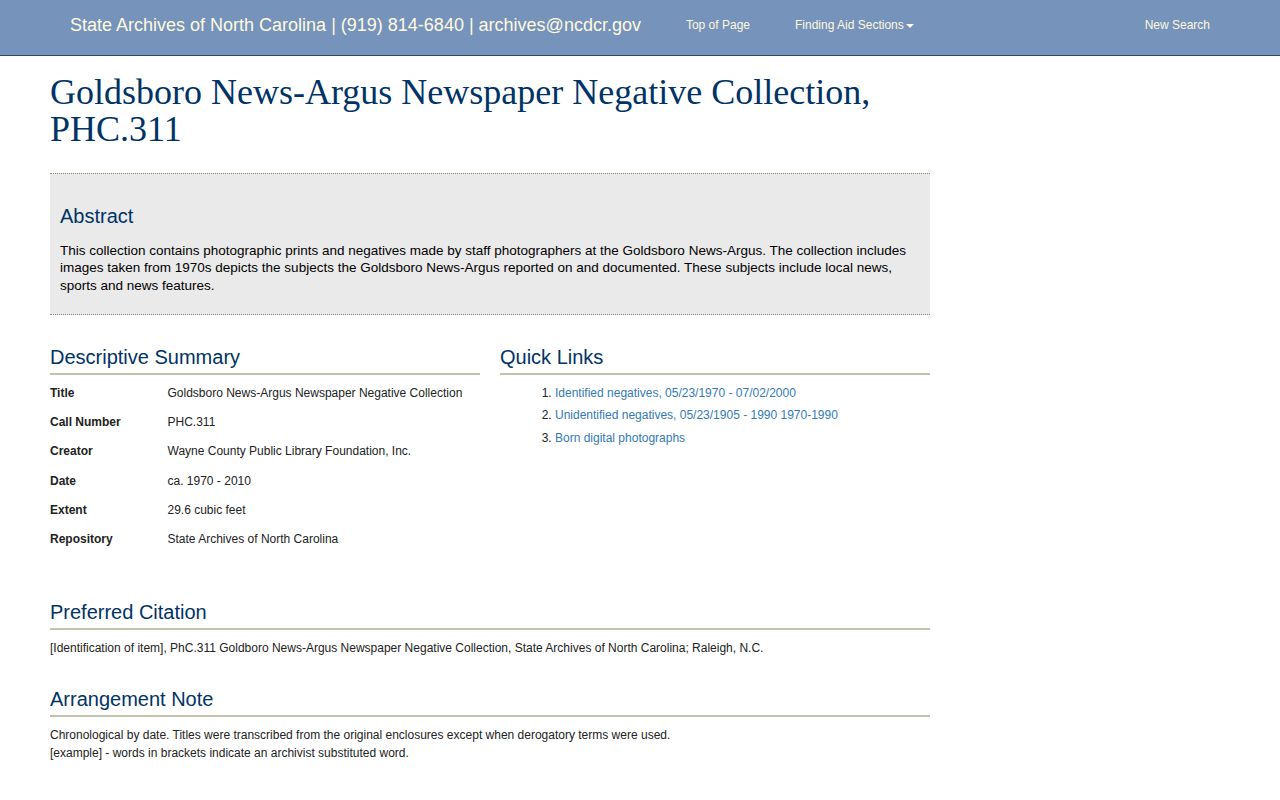
This page describes a collection. It does not index faces, so ask about a named item first, then whether a scan exists.
Sheriff Record Retention
The State Archives’ County Sheriff Office schedule splits photo series from arrest series instead of giving “mugshots” one life span. A standalone identity photo gets different handling than one inside a case history. A roster can vanish early. The underlying record may linger in agency files. A related court or news record can outlive it.
| County sheriff series | Schedule rule described by the Archives |
|---|---|
| Arrest-processing tracking record | Destroy one year after arrest. |
| DWI tracking record | Retain two years. |
| Arrest report outside a case file | Retain five years. |
| Identification photo outside a case history | Destroy after three years if it is not part of a case file. |
| Photo in a felony or misdemeanor case history | Follow the case-history schedule. |
| Inmate incarceration record | Generally destroy three years after release or transfer, subject to case-specific exceptions. |
| Inmate-list report | May be destroyed when superseded or obsolete. |
Schedule rules prove nothing about a transfer. A legal hold can pause destruction. Holds follow audits, lawsuits, or investigations. The agency must first pinpoint the right series. A request that says only “old mugshot” leaves staff guessing between a roster report, case file, identity-photo series, or incarceration record.
State agencies follow a separate law-enforcement functional schedule. Adult offender combined records generally stay until release or supervision ends, plus ten years. Other offender records may last three years past the completion point. Some juvenile records transfer at adulthood. Later rules then take over. Material with historical value, including some death-row records, may reach the Archives, though the schedule describes retention only and never promises public access to every file or image.
Note: Retention dates apply to record series, and an audit, lawsuit, investigation, or other hold can delay destruction.
Requesting Old North Carolina Records
When a finding aid points somewhere, send the Archives a focused request. A narrow search gives staff a fair shot. Never ask for a whole newspaper run. Instead, confirm whether the item sits at the Archives, with an agency, or with a newspaper or court. Copies can hit privacy, copyright, donor, or quality limits. Add the series or finding-aid detail. Say plainly whether you want a scan or a paper copy, then follow these steps from catalog to record request.
- Name the record. Give the person’s full name and any alternate spelling. Add the county, approximate date, agency, newspaper, case number, or event detail.
- Point to the collection. Provide a finding-aid title, series, box, folder, or item number. If those details are unknown, share the catalog link and ask staff to identify a likely file.
- Say what format you need. Name the format and record type. Say whether you want a photo, case file, newspaper item, or another record.
- Use the right order route. The Archives accepts online orders through the NC Archives Store. North Carolina residents may also use the listed mail or email routes, including archives@dncr.nc.gov.
- Confirm cost and limits. The service page describes included copies and charges. Some nonresident research requests have a per-inquiry fee. Ask first if scope or reproduction rights are unclear.
The Archives works requests in order. No delivery date is promised. Broad asks may need clarification, and staff may split them into smaller inquiries. If a sheriff still holds the item, contact that office, since the Archives cannot produce a record it never received; the copy-ordering page lists current routes, copy terms, and limits.
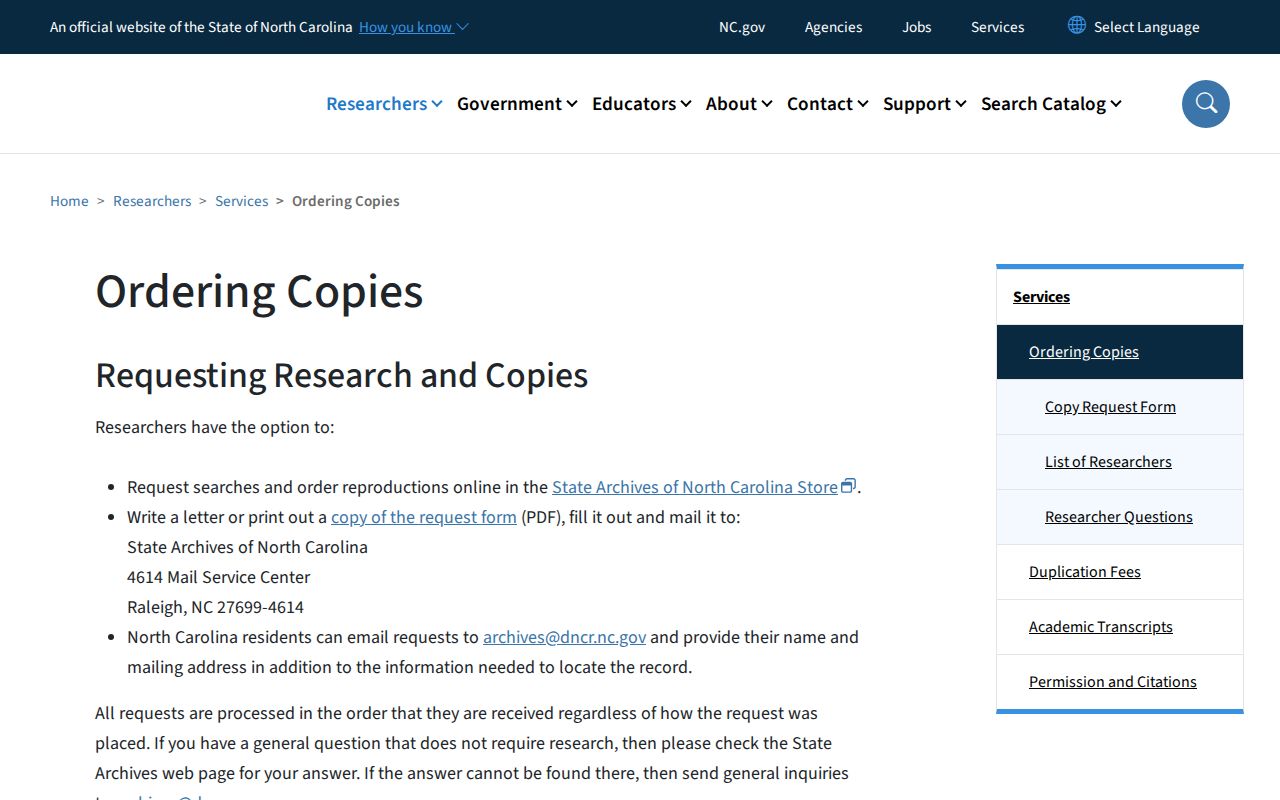
The order page starts a service request. It is no mugshot catalog, so give enough detail to identify the record.
Recent vs Old North Carolina Records
Begin with the county that made the booking. Counties set their own roster and feed practices, so the details vary from one to the next. Some post no photos or run no online log. The North Carolina County Directory reaches each local source. For a wider sweep, the statewide arrest and booking search keeps sheriff, court, and NCDAC records apart. That split matters. It shows which office holds the record.
Older items follow their own paths: case photos stay with the file, a standalone image keeps its own retention period, and a newspaper may hold a negative long after an agency destroys its print. A web roster is only an access tool, so it proves nothing about what the office still holds today.
Note: An archive finding aid marks a possible collection, while the custodian confirms whether a named image is present and available for copying.
Expunction and Archive Copies
An expunction rewrites state records. It cannot erase every old copy in North Carolina. The clerk sends notice to each agency named in state law. That list covers the arresting agency, NCDAC when it applies, and the SBI, which then alerts the FBI. State law also reaches licensed bulk-data companies. Archives schedules and transfers answer different questions. Neither settles what an order must seal or destroy.
The Judicial Branch says expunction does not automatically clear private copies, news archives, or search results. Old news photos need a second step. Contact the publisher or archive that holds the item. Ask about its privacy, donor, copyright, and correction rules. Send only the order and record details needed to identify the item. A publisher's free process fixes that publisher's copy alone; it is not a court order and cannot reach copies elsewhere. The North Carolina agency-notice statute shows how clerk notice travels to state and federal record holders.
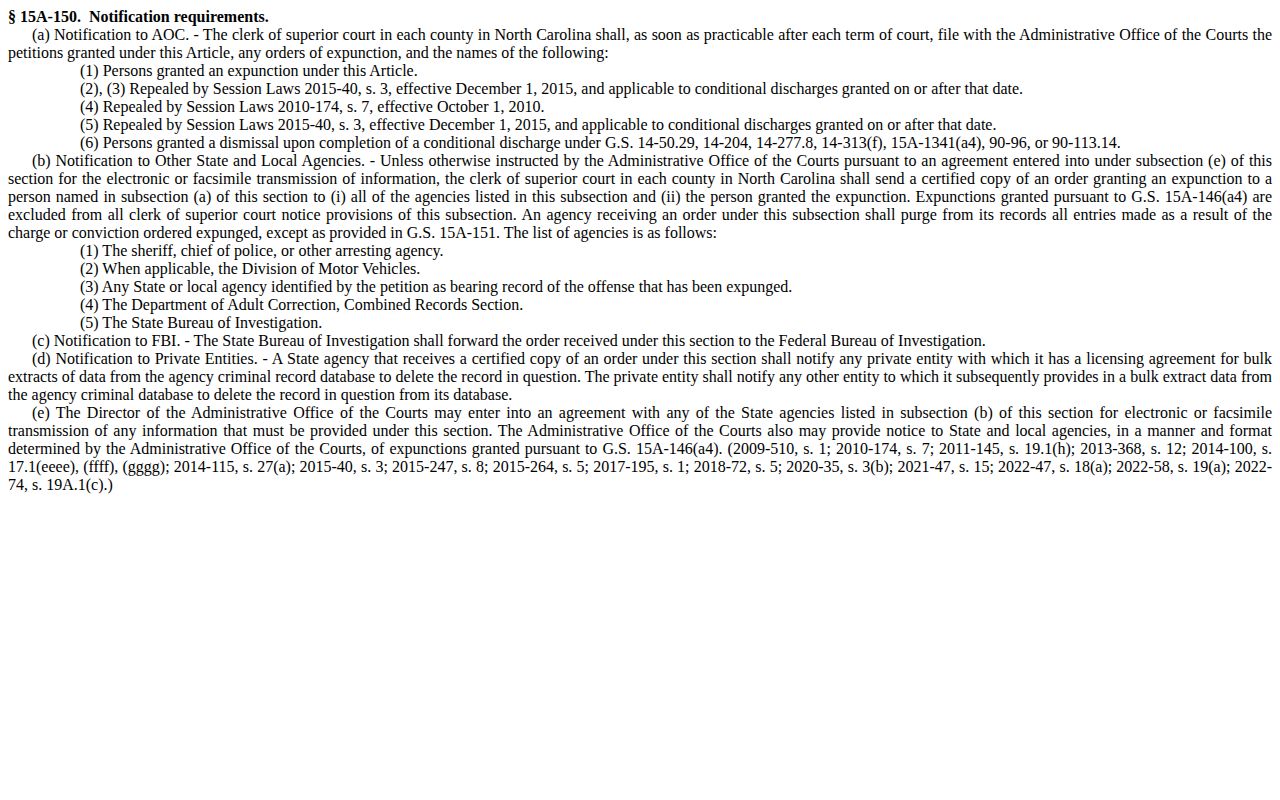
Agency notice covers official records only. A newspaper copy stays outside the state file. The North Carolina expunction guide from the courts explains which cases qualify and how petitions work.
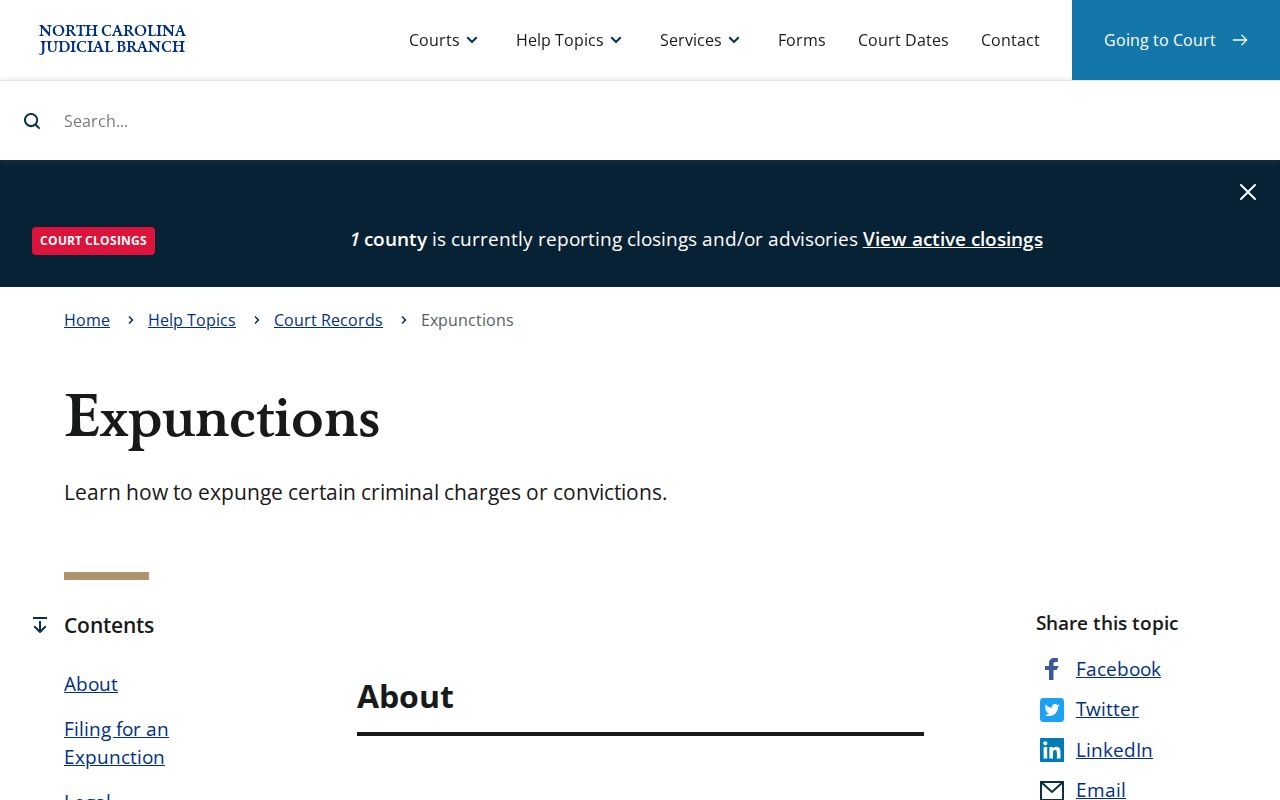
The court guide explains legal relief. An archive image needs a separate inquiry.