
North Carolina Notable Arrests
A public arrest record marks one moment in a case. The final outcome lives in court files. North Carolina's well-known cases prove why custodians matter. Some began with a local arrest and ended in federal court. One started in military custody. Protest arrests finished with mixed results.
An arrest report, a booking entry, a charge, a docket, and a court outcome are separate records. A news photo is not automatically a booking image. Track each case by who holds the file and how it ended. Protesters met different fates, so no single result fits them all.
North Carolina law splits public arrest information from confidential investigative files, and the public-record statute draws that line.
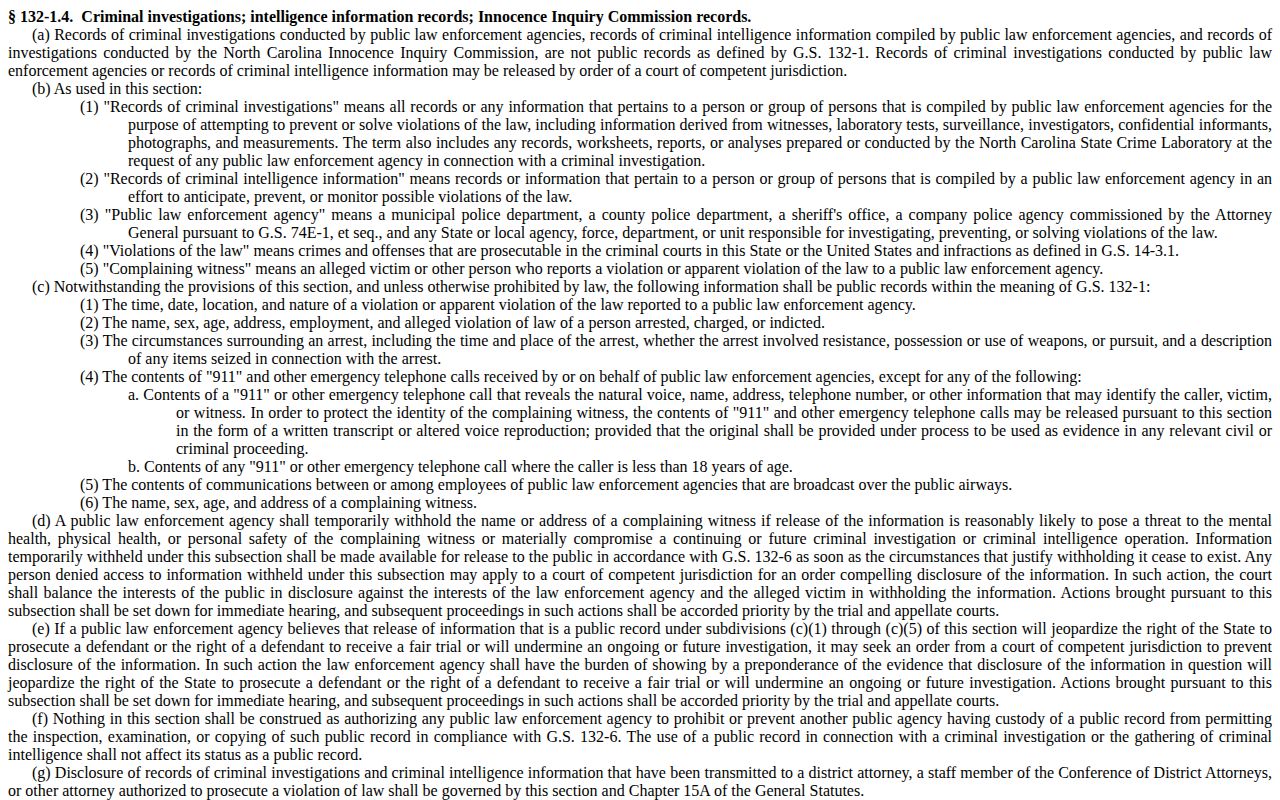
That legal boundary helps when you want an original report. It says nothing about whether a booking image was ever made or put out.
North Carolina Case Record Map
The map below lists documented sources and settled outcomes, and it leaves open whatever remains open instead of guessing.
| Case and event | Record custodian or search path | Documented outcome |
|---|---|---|
| Eric Rudolph, Murphy arrest, 2003 | Murphy Police or Cherokee custody record; federal DOJ and court records | 2005 federal guilty plea; four consecutive life terms |
| Dylann Roof, Shelby arrest, 2015 | Arresting North Carolina agency; federal docket and South Carolina court | Federal conviction and death sentence; separate South Carolina guilty plea and death sentence |
| Michael Peterson, Durham arrest, 2001 | Durham County Superior Court, eCourts, and appellate record | 2017 Alford plea to voluntary manslaughter; credit for time served and release |
| John Edwards, federal case, 2011 to 2012 | U.S. District Court for the Middle District of North Carolina; DOJ archive | Acquitted on one count; mistrial on five others |
| Jeffrey MacDonald, Fort Bragg, 1970 | Federal military investigative and court-martial records | 1979 court-martial convictions and three life sentences |
| William Barber and Moral Monday arrests, 2013 | Legislative police records and Wake County court records | Different cases had dismissals, convictions, acquittals, or community-service arrangements |
| Greensboro sit-ins, 1960 | Greensboro and Guilford records, courts, and historical collections | Individual outcomes differ; research each person and date |
North Carolina Photo Law History
North Carolina's identification-photo rule dates to 1973, when the Criminal Procedure Act created it. Later amendments added named offenses, identification needs, and juvenile limits. N.C. Gen. Stat. §15A-502 permits photographs and fingerprints in listed situations. It never requires online publication.
Gathering rules and release rules are two different things. Section 132-1.4 governs public arrest information. Investigative photos can stay protected. A booking record is not a court exhibit, and a web copy is its own animal. No state appellate ruling settles general paid booking-photo publication, though narrower disputes may exist.
Rudolph's North Carolina Arrest
A Murphy officer caught Rudolph behind a grocery store in Cherokee County. The date was May 31, 2003. He was a federal fugitive, wanted for bombings. Alabama and Georgia later handled the prosecutions. So the North Carolina arrest and the federal cases sit with different custodians.
Rudolph pleaded guilty in 2005. He drew four consecutive life sentences without parole under the plea deal. He dodged a federal death-penalty trial. The Department of Justice disposition release documents the outcome.
Ask Murphy Police or Cherokee County for the original arrest or custody record. No public booking photo is confirmed here. A wanted poster or news portrait does not fill the gap.
Roof's North Carolina Arrest
Roof was arrested in Shelby on June 18, 2015, after the Charleston church shooting. Shelby sits in Cleveland County. South Carolina took custody next. The federal case materials cover one stretch of that trail.
A federal jury convicted him of hate-crime and obstruction charges. The court sentenced him to death in 2017. South Carolina ran a separate murder case. He pleaded guilty there and received another death sentence. None of that turned the North Carolina arrest itself into anything more.
Request the arrest record from the local agency or Cleveland County. Use the federal docket for federal filings. The widely circulated image has no confirmed tie to Cleveland County booking files.
Peterson's North Carolina Arrest
Durham police arrested Peterson in 2001 in the death of his wife, Kathleen. His first trial ended in conviction. SBI bloodstain-analysis evidence sparked years of litigation and a new-trial ruling. In 2017 he entered an Alford plea to voluntary manslaughter.
He got credit for time served and walked free. The 2017 disposition report sums up the ending. Durham County Superior Court and the appellate records hold the deeper history, and the North Carolina Judicial Branch Portal posts public docket information for participating counties.
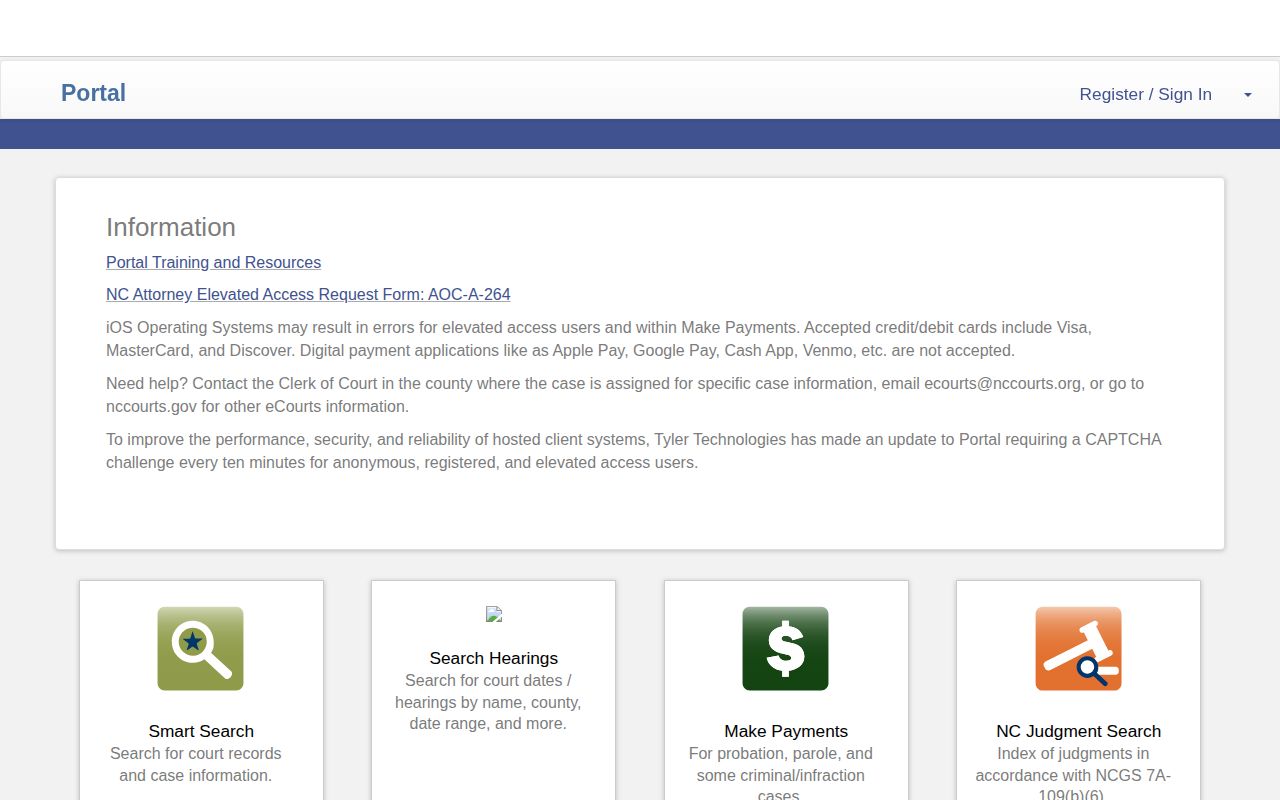
A docket search exists to confirm how a case ended. Treat any portal result as a lead, not a certified record.
North Carolina's Edwards Indictment
John Edwards surrendered for arraignment after a 2011 federal indictment in North Carolina on campaign-finance charges. The Department of Justice release names the charges and the court.
A jury acquitted him on one count in 2012. The judge declared a mistrial on five others, and a mistrial ends without a verdict. The DOJ disposition release records the result. The federal Middle District court and the DOJ archive hold the files. No public county booking photo appears. A surrender or arraignment picture is not necessarily one.
MacDonald's North Carolina Military Arrest
Jeffrey MacDonald was an Army doctor stationed at Fort Bragg. After his wife and two daughters were killed there in 1970, he entered military custody. His case never passed through a county jail. A court-martial convicted him in 1979. Three life sentences followed, and appeals never erased them. The U.S. Supreme Court's MacDonald v. United States opinion covers part of that long legal history. The investigative and court-martial files remain federal military records. Fort Bragg lists no booking photo, so treat any portrait or documentary still as exactly that, never a mugshot from a booking desk.
North Carolina Moral Monday Arrests
Moral Monday protests shook Raleigh's Legislative Building in 2013. Rev. William Barber II was among those arrested during the demonstrations. Contemporary reporting names the charges and the General Assembly Police role. Outcomes split widely. WRAL reported that many May 20 cases were dismissed. Others ended in convictions, acquittals, or community service. The follow-up account lays out that mix. For Barber's own result, search by name and case number. Legislative or capital police may keep the arrest citations. Wake County records hold court outcomes. No public booking photo exists for him; a protest image is not a booking photo.
North Carolina Sit-in Arrest Records
Black college students sat down at Greensboro's segregated lunch counters in 1960. Police arrested them for it. Case outcomes differed from person to person. Court, police, and newspaper files can even disagree on names and dates for the same event. The Greensboro History Museum and the DigitalNC newspaper archive offer solid historical starting points. Civil-rights era photos are usually news shots. For a named person's arrest record, give the archive or clerk the full name and event date. Label any image by its collection and type.
North Carolina Arrest Archives
Start any archive search with the State Archives. It offers no general online corrections mugshot database. Old booking photos can sit in several places instead. A county may hold them, or they may move to the State Records Center or Archives after appraisal. Newspaper files, court papers, military files, and local-history collections often hold them too. A missing jail-portal photo means little. Related records may still survive elsewhere.
A finding aid only proves a collection exists. It does not prove a named image survives in digitized form. The State Archives' Goldsboro News-Argus finding aid catalogs newspaper negatives that may include mugshot-related material.
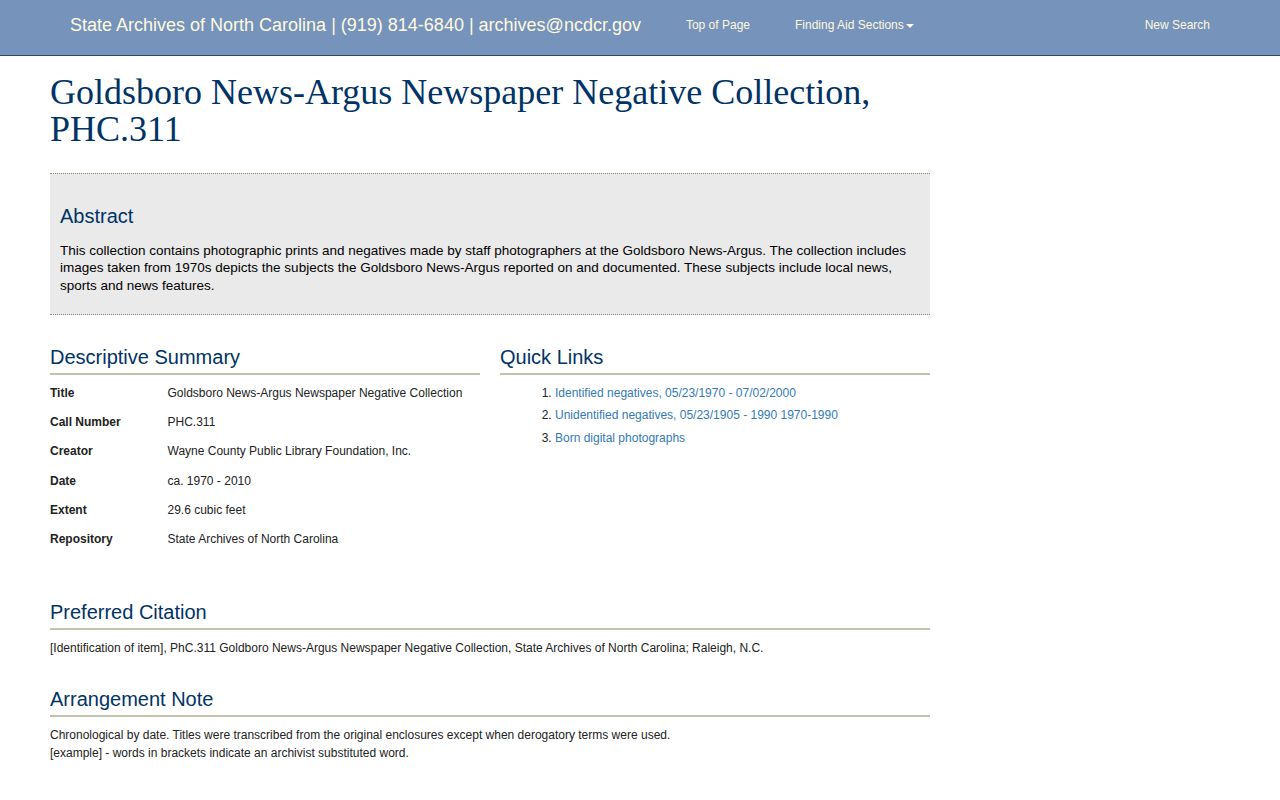
Note: Write down the name, county, date, agency, and any case or collection number before you search. Old newspaper images are often news shots, not bookings. The Archives copy-ordering page explains how to request scans and copies.
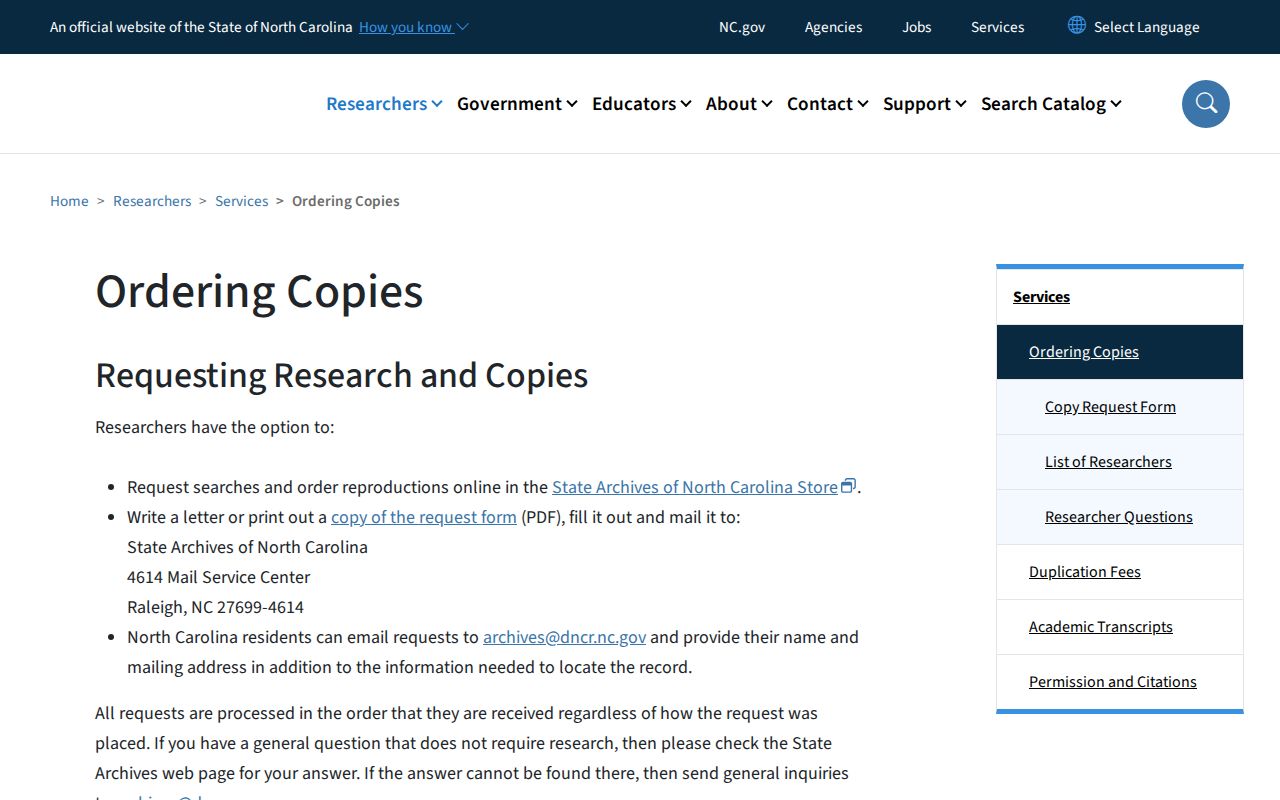
A copy request proves neither survival nor permission. Before publishing any scan, ask about privacy, copyright, donor limits, and image quality.
Trace a North Carolina Arrest
These cases all point the same way: a name search has to end at a custodian and an outcome. Start with the date and place. Then pin down the arresting agency and the court. For current bookings, the statewide records home page maps county routes and separates local booking records from prison files and dockets.
- Note the full name, spelling variants, date or range, county, and agency; a name alone can return the wrong person.
- Ask the arresting agency or detention custodian for the original record, since a booking photo may not be public or online.
- Search public dockets in the Judicial Branch Portal, then contact the county clerk for an official docket or certified copy.
- Follow federal cases through federal courts and DOJ releases, and use the military record custodian and later opinions for military custody.
- For older records, use the Old Mugshots archive path. Staff must confirm whether a named item survives and can be copied.
Match the arrest to the final entry. Dismissal, acquittal, plea, and conviction differ. A failed search may mean the wrong county, a delay, a restriction, an expungement, or out-of-state custody. Ask the clerk when exact status matters. News photos, old posts, and aggregator copies are not official booking images. If no original source turns up, say plainly that the photo could not be located.