
North Carolina Mugshot Access
The short answer is that it depends on the record. State law lets officers photograph people in defined situations, yet no agency is ordered to post every image online. The public-records law opens up some arrest facts but keeps criminal-investigation records closed. A name and charge may appear without the photo. Some counties put images on their own rosters. Others do not. One county's practice never becomes a statewide feed.
Start with the custodian and ask for one specific item. The sheriff holds booking records. The clerk holds the court file. The Department of Adult Correction, known as NCDAC, keeps prison and supervision records. Each office answers only for what it holds. An investigative photo may be withheld while other arrest details stay open, and a sealed or expunged case tightens things further. State rules govern three distinct steps: collection, disclosure, and later relief.
North Carolina Photo Rules
No single statute governs North Carolina mugshots. The nearest thing is N.C. Gen. Stat. §15A-502, covering photographs and fingerprints. For felonies and misdemeanors it permits photos in specified situations, including an arrest or commitment to a detention facility. Other subsections handle domestic-violence cases, protective orders, impaired driving, and controlled-substance matters. These are collection rules only. Nothing in them obliges an agency to publish a photo online.
Lower-level traffic cases follow a different track. Certain Chapter 20 Class 2 and Class 3 citations, with exceptions, skip the ordinary photo and fingerprint process. One narrow exception is the moving-violation identity check. It applies when the person lacks a valid license. The law permits a neck-up photo or fingerprints, used for identity only. The agency keeps it through final disposition, then destroys it. This scheme dates to the 1973 Criminal Procedure Act, with later offense-specific amendments.
Section 132-1.4 does separate work. It shields investigative records while listing which arrest facts are public. The official §132-1.4 text shows the split. North Carolina's appellate courts have no published ruling on an enacted publish-for-payment booking-photo law, so the statute itself does the deciding.
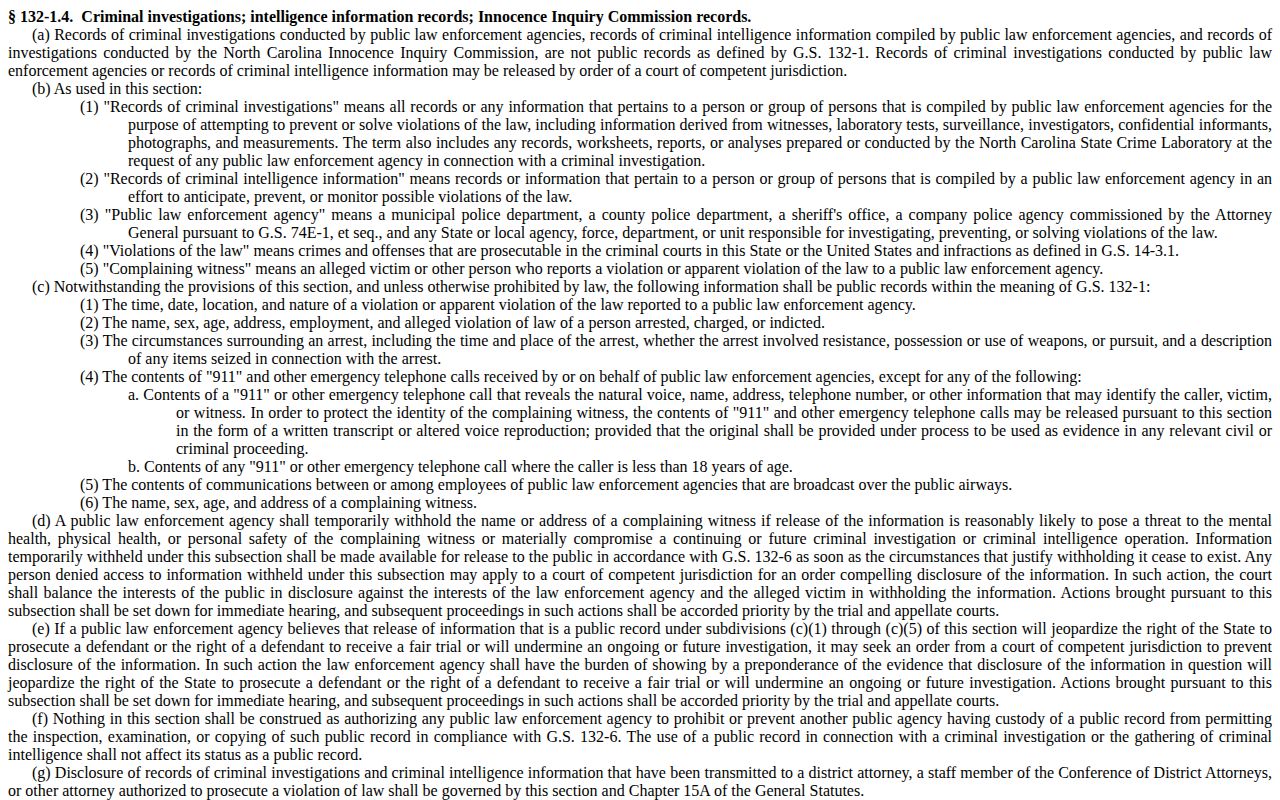
The statute hands out public arrest details while treating photos gathered during an investigation as investigative records. The exact item and any legal limit still control the outcome.
North Carolina Mugshot Proposals
The General Assembly has weighed tighter rules more than once. A bill is not law until enacted. H.B. 446, filed in 2025, proposed limiting when agencies release pretrial booking photos to publishers that charge fees. Agencies could still post images on their own sites or apps. Removal, destruction, and civil-liability terms were part of the package. The bill went to House Rules on March 20, 2025, and was not enacted.
Other proposals raised the same issue. S.B. 129 would have made booking photos confidential, with exceptions for missing persons, investigations, and court orders. S.B. 660 surfaced in 2021. The debate has crossed several sessions. Check a bill's current status before relying on it. A proposal grants no present right to have a record removed. The legislature's H.B. 446 page shows the referral history rather than enactment.
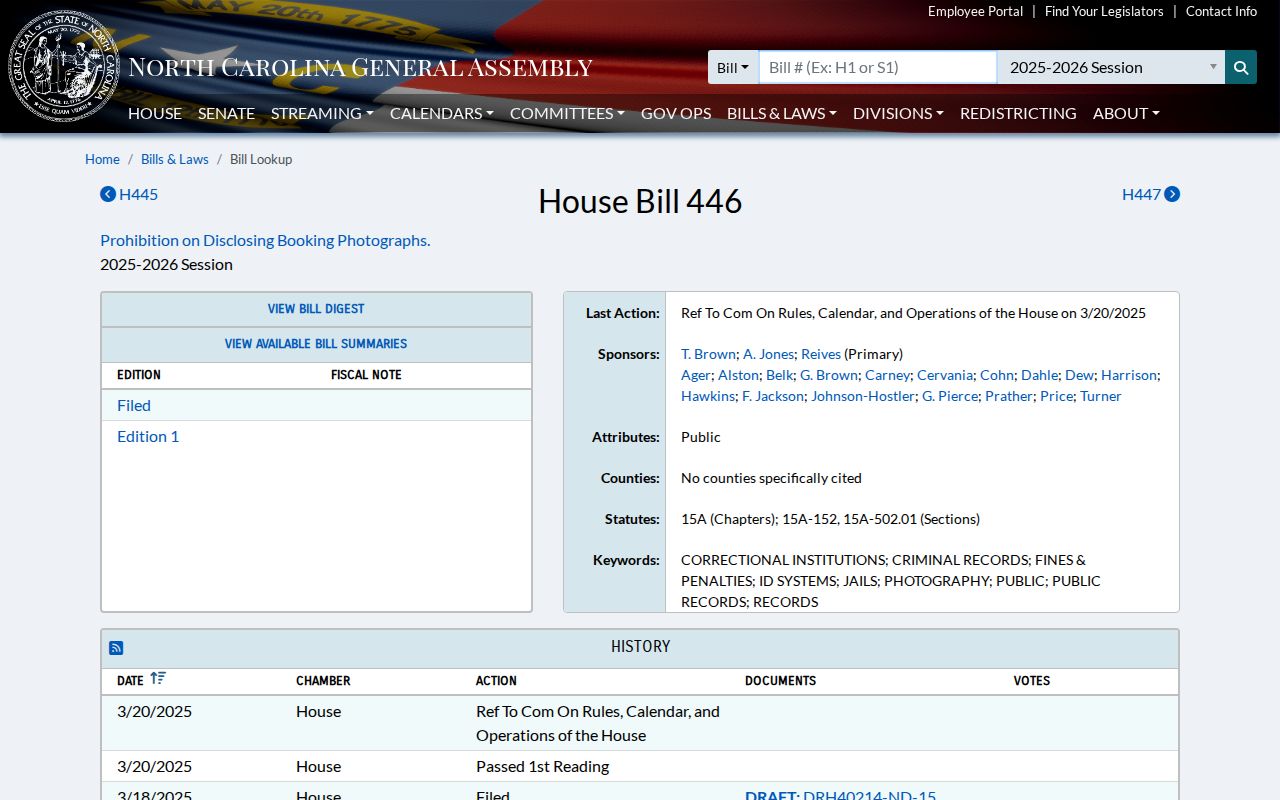
That page tracks a bill, not a law. The operative rules stay in the enacted statutes until the General Assembly changes them.
North Carolina Arrest Records
Section 132-1.4(c) spells out which arrest facts are public. Those include the time and place of arrest, the alleged violation, and a person's name, sex, age, and address. Circumstances like pursuit, resistance, weapons, and seized items can be included too. None of that converts an investigative photograph into a mandatory public image. An agency may show a photo on a roster. It can list names and charges only, or weigh a case-specific request. It may hold back the image while releasing everything else the law requires.
County rosters and booking feeds deal with local custody. They vary by sheriff. When asking the arresting agency, identify the person, date, custodian, record type, and format. The North Carolina statewide arrest and booking search points to each county source. Court records answer a different question: what happened after the arrest. The North Carolina eCourts Portal shows public docket events and outcomes. Official copies still come from the clerk.
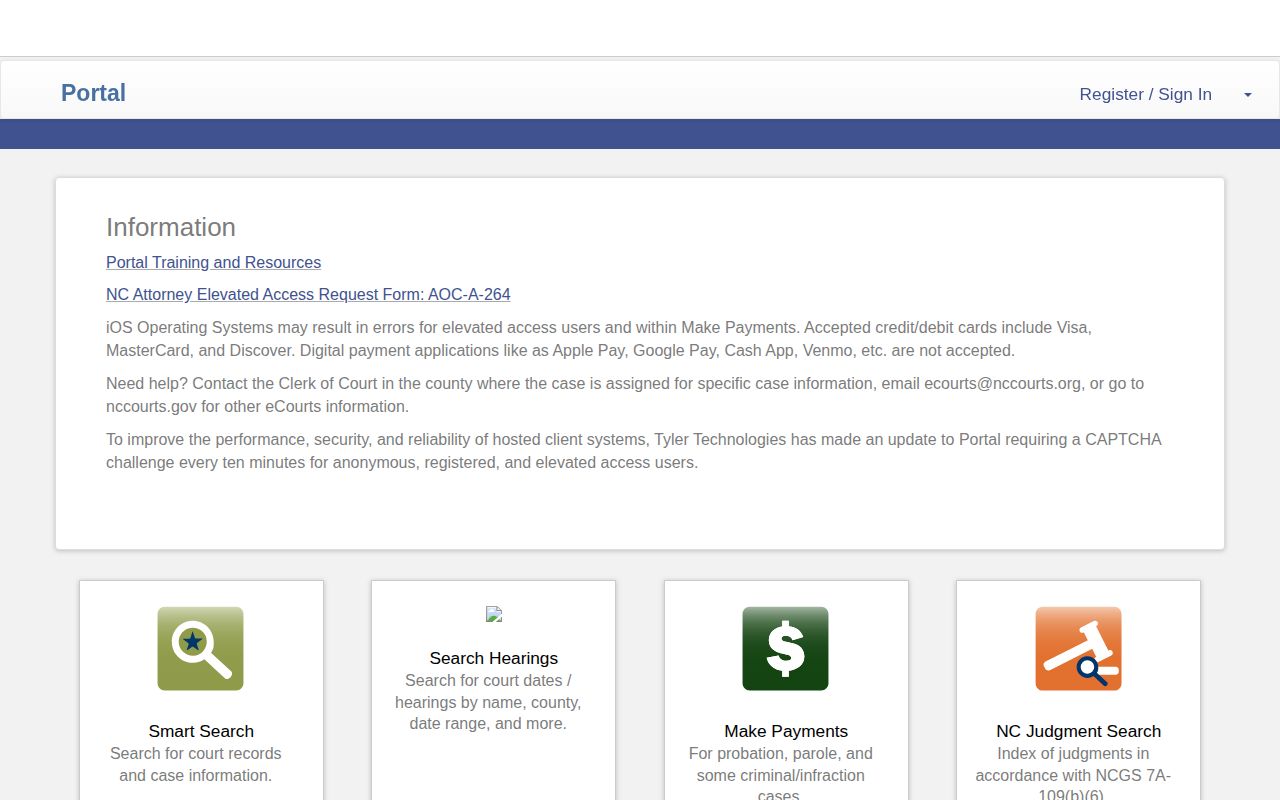
A blank result on a court search tells you little. Sealed, juvenile, and expunged matters never appear in ordinary public results. A missing entry may reflect access limits or indexing, not the absence of an arrest.
A state-prison profile sits in the NCDAC system, not on a county roster. The NCDAC offender search covers state prison and community supervision. Its history reaches back to 1972. It holds no county-jail, local-police, or court files. When a county response seems incomplete, ask whether the photo is investigative. Ask whether the agency holds a responsive record. Also ask what law or order limits release. Name the agency, the event, and the record type. Court records belong with the clerk, and photo requests never go to NCDAC.
Juvenile and Withheld Records
Juvenile records play by a different rulebook. N.C. Gen. Stat. §7B-3000 keeps juvenile court records confidential unless a listed form of access or a court order applies. Confidential is the default. Together with §15A-502(c), that blocks an adult-style public roster from repeating a juvenile's name or image just because a post exists online. The Juvenile Code also decides when such records are sealed, destroyed, or released.
Other restrictions reach further. Witness-safety details, confidential sources, active investigations, and sealed warrants can all be withheld, and so can material where release could harm a fair trial. Section 132-1.4(d) and (e) permit temporary withholding or court-ordered limits in stated circumstances. The eCourts portal itself warns that juvenile, protective-order, sealed, and some unreturned warrant material stays out of ordinary public searches. A blank search can mean the record is restricted, unindexed, delayed, or held by another custodian.
The rule is not that a photo must be online because it exists. A missing photo does not disprove an arrest, either. Ask the office what category of record it holds. Ask what reason supports any withholding. A public arrest fact and a withheld photo can both sit comfortably within North Carolina law.
These limits are why dates and status labels matter. A new booking entry can change after a court appearance. The original intake record may still sit in an agency file. A later order can restrict access. A search interface can lag behind the clerk's file. Delays happen. Confirm the case with the record custodian rather than treating a search result as a full history.
North Carolina Expunction Records
An expunction is a court process. It removes a qualifying charge or conviction and seals or destroys the state records of it. North Carolina has no single eligibility test. Waiting periods vary too. The Judicial Branch lists separate paths for some misdemeanor and felony convictions, dismissals, not-guilty outcomes, deferred matters, and other cases. Eligibility can turn on the offense, the person's age, prior record, and outcome. It also matters whether sentence, probation, or supervision is complete. Petitions generally go to the clerk in the county where the charge or conviction occurred.
A typical petition fee runs $175. Some dismissals and not-guilty outcomes require no fee. A fee waiver may be available. Deferred matters follow different terms. Processing may take months. A dismissal alone does not create an expunction order. Check the current statute and the official guide before asking an agency to change a record.
If an order covers a booking photo, the agency must follow its terms plus applicable sealing or destruction rules. That can pull an image from a sheriff's roster or public search. It cannot guarantee every private copy disappears. The Judicial Branch advises contacting a private source when information stays online after state records are handled. Search engines may refresh an outdated result once the source changes. That clears the search display, not the source copy. The North Carolina expunction guide lays out petition routes and forms for cases that may qualify.
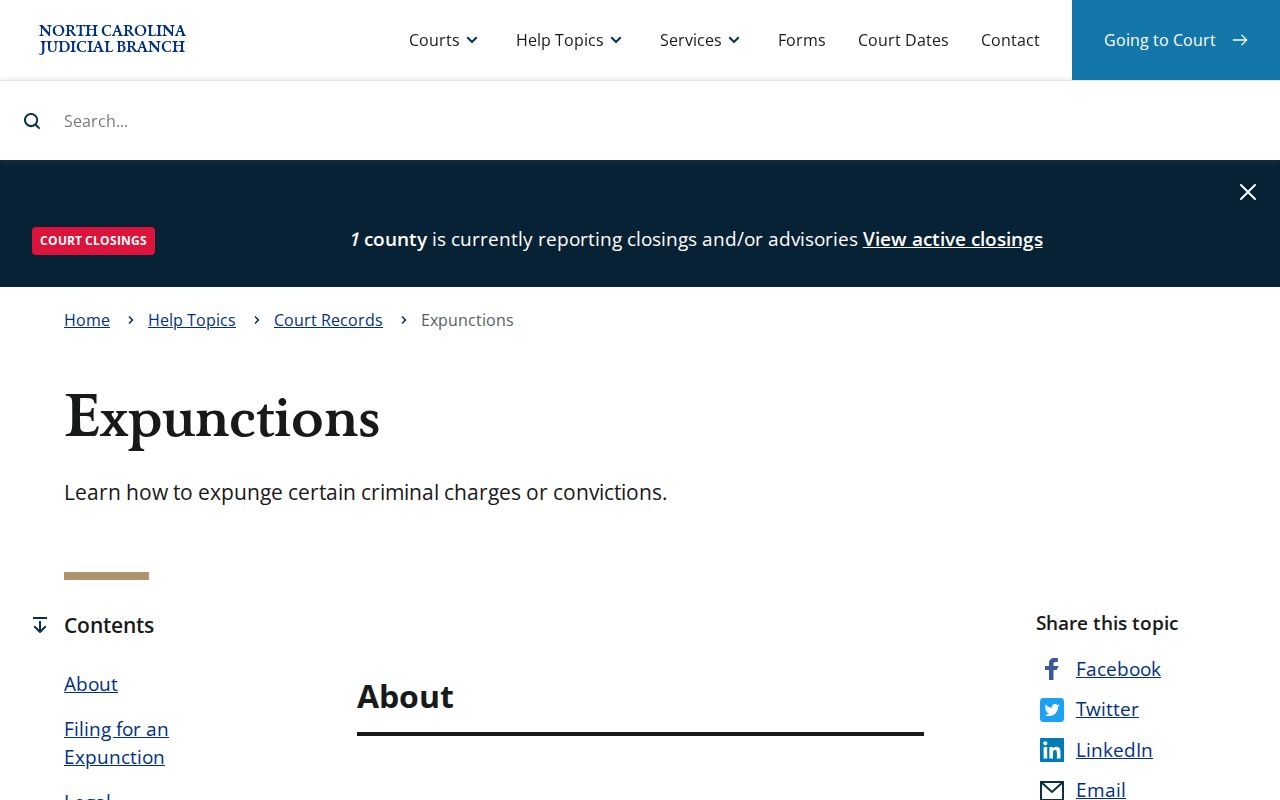
The court guide covers eligibility and the order itself. It promises nothing about private or archival copies elsewhere.
North Carolina Agency Notice
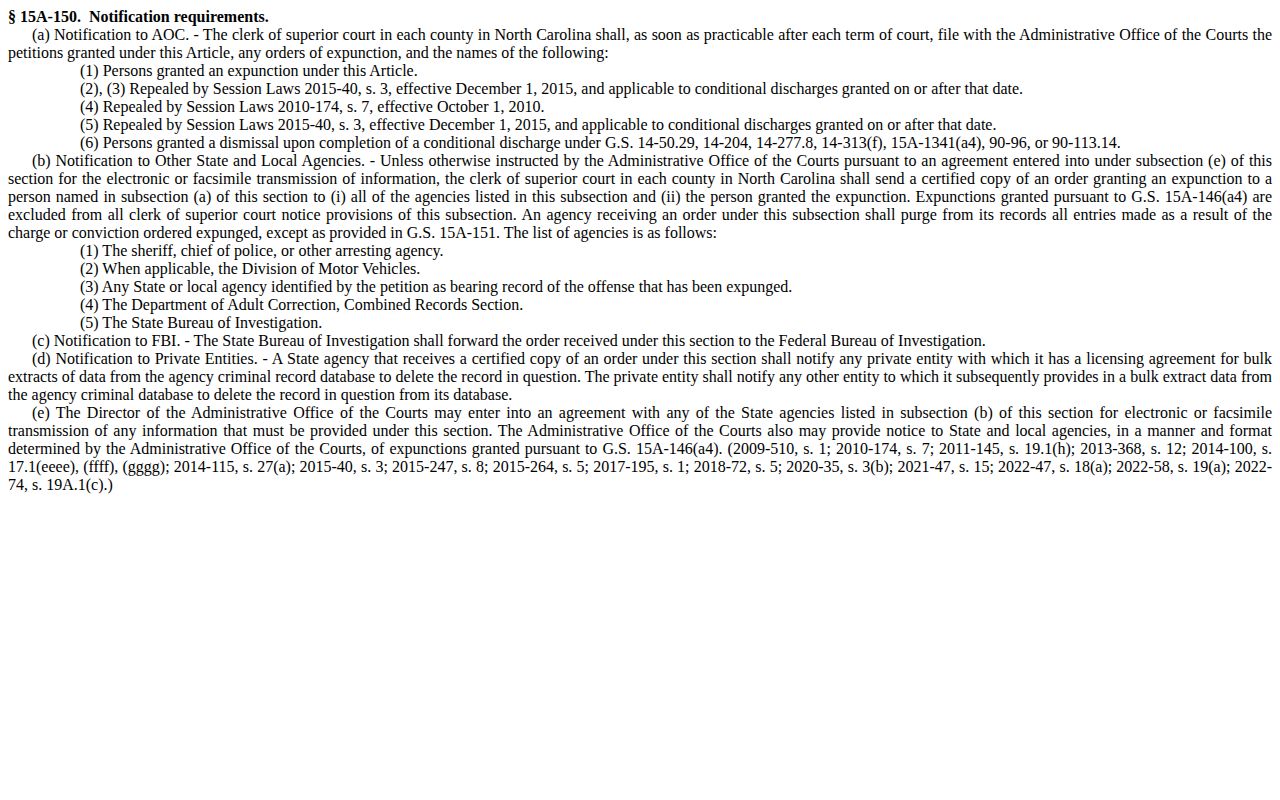
Once an expunction order issues, the clerk sends notice. The agencies are named by state law. The arresting agency and the SBI are on that list. NCDAC gets notified when it applies. The SBI then passes word to the FBI. The statute also reaches licensed bulk-data private entities. No deletion command goes out to newspapers, archives, search engines, or private reposts. The official §15A-150 notice rule shows how the clerk's order reaches state and federal record holders.
The notice process changes the state-held record. A news outlet's copy or a private collection needs its own inquiry. For a government copy, contact the holding agency and identify the exact order and item. For a private copy, use the publisher's stated correction path. Include the order or clerk-certified proof only when needed. Skip unrelated personal details. An expunction order and a publisher's free policy are separate routes. Neither promises every copy elsewhere will vanish.
Publisher Correction Paths
Unofficial sites lift their arrest entries straight from sheriff and jail pages. A repost can lag, repeat itself, or carry the wrong name. It may sit stale for months. None of that makes the publisher a substitute for NCDAC, the clerk, or the court. Confirm identity and disposition through official records first. Publishers advertise free correction or removal policies. Yet a policy is not a custody seal, and updated copies can survive elsewhere.
| Publisher | Stated free process | Limit |
|---|---|---|
| Busted Newspaper | Its listing request asks for the exact page, identifying details, reason, and support such as a dismissal or expunction order. | Its observed policy gives a review estimate of about 5 to 10 days, not a promise for every request. |
| RecentlyBooked | Its policy accepts free requests for errors, duplicates, wrong-person matches, juvenile matters, and qualifying case outcomes. | The publisher says current accurate public records are generally not removable under its policy. |
| Mugshots.com | Its record-maintenance policy describes free updates or removal for certain legal or identity issues with documentation. | Its review target is up to 10 business days for some removal requests; favorable updates have no fixed schedule. |
| Arrests.org | The North Carolina page offers a public contact route. | No North Carolina free-removal promise or response deadline was verified. |
| Mugshots.zone | No North Carolina-specific free policy was verified. | A form for another state is not evidence of a North Carolina process, and no current North Carolina section was confirmed. |
With a newspaper story, go through the newsroom's correction contact. Send the story link and solid proof of a changed outcome. North Carolina sets no single statewide news opt-out rule. Even after an expunction, a lawful report can stay in the archive. The choice to update, annotate, or remove belongs to the publisher. The state also has no enacted general law barring a booking-photo publisher from charging money to take a picture down. A payment demand is a warning sign. Never buy a promise that an unofficial copy will vanish everywhere.